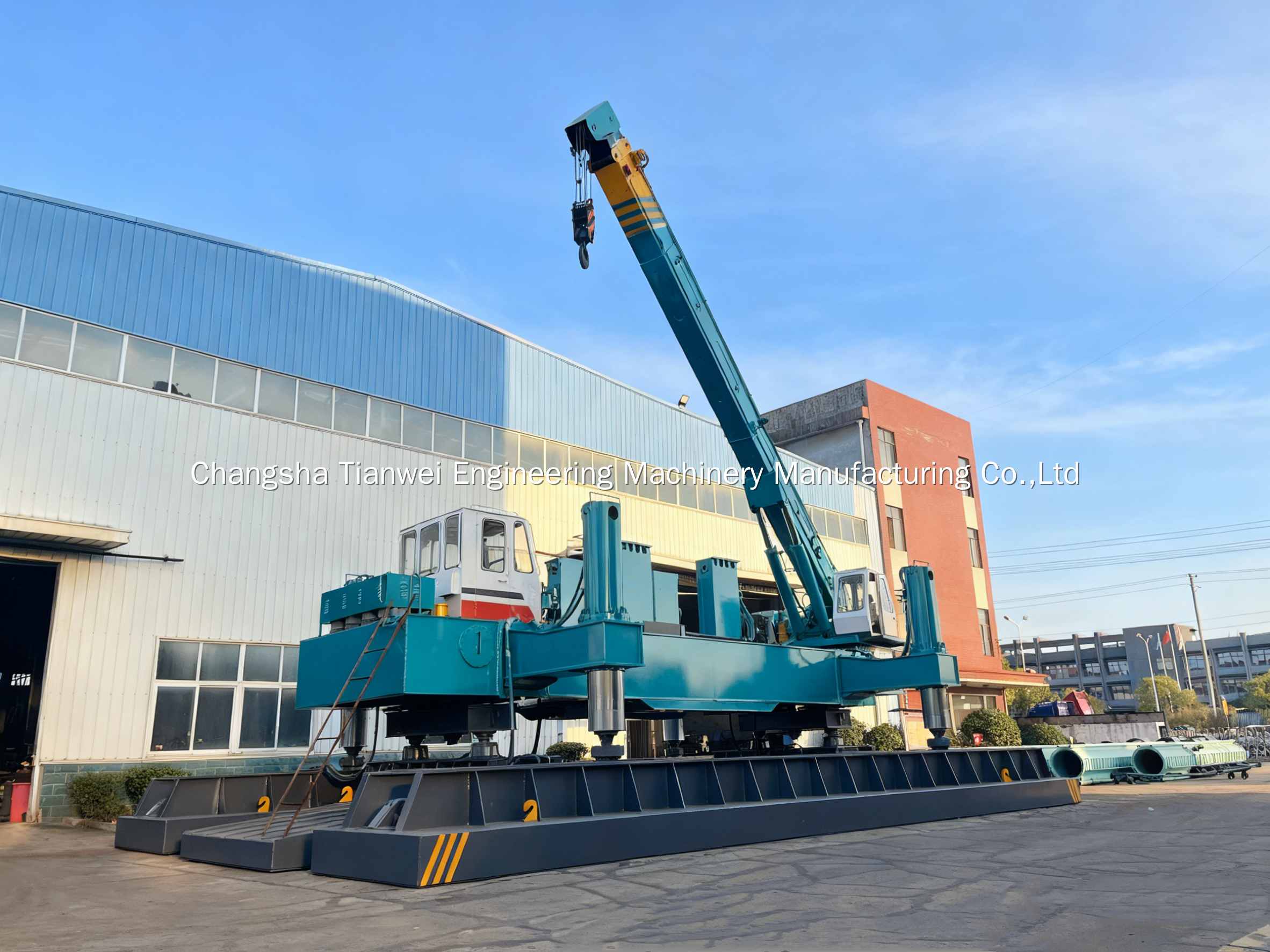
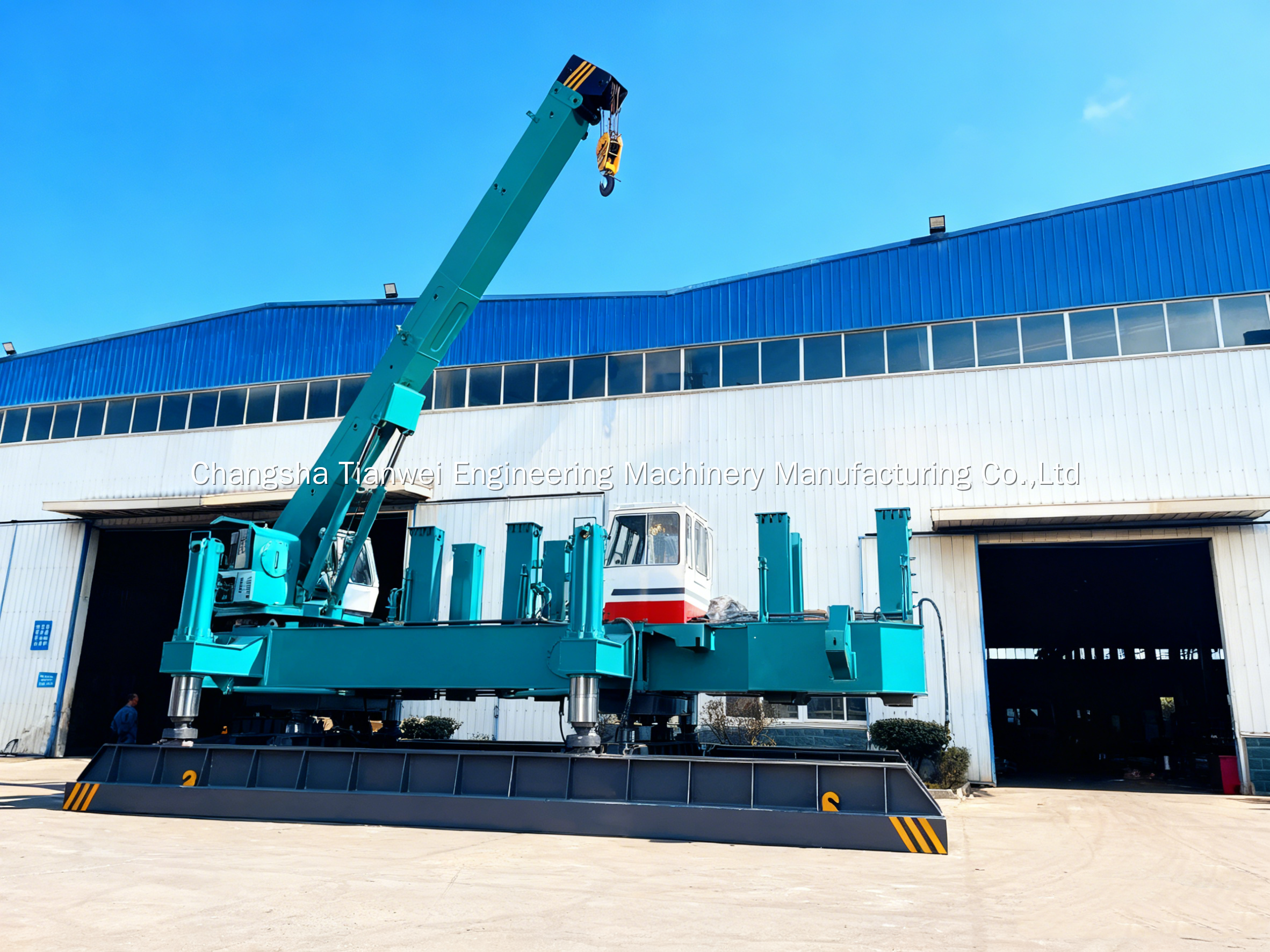
I. Core Logic: Replacing "Brute Force Piling" with "Intelligent Control"
1. Pressure Regulation: As Flexible as "Holding Chopsticks"
The 680-ton piling force sounds like a rigid indicator, but its true technical value lies in "adjustable precision." During operation, sensors on the drill pipe real-time monitor soil resistance – reducing pressure and accelerating speed in soft soil; instantly boosting pressure to over 600 tons while slowing down penetration in dense sand or gravel layers to avoid pile cracking from excessive stress.
Operators no longer rely on experience to "guess parameters" – they just monitor the pressure curve on the screen, and the system automatically matches the optimal solution.
2. Vibration Control: Minimizing Impact
Noise and vibration are the biggest nuisances in urban construction. Unlike impact-type pile drivers, static pile drivers eliminate noise at the source. Equipped with a three-layer noise reduction cover and hydraulic buffer system, their operating noise is controlled at around 65dB – equivalent to normal conversation volume.
More importantly, vibration is confined to within 1 meter of the machine through optimized center of gravity and drill pipe structure, avoiding the "buzzing resonance" of surrounding buildings caused by traditional hammer drivers. This is why supervisors prefer static pile drivers for construction near subway lines or schools – compliance directly determines smooth construction progress.
II. User Perspective: "Invisible but Critical" Designs
For operators and construction teams, a pile driver’s performance depends not just on technical specs, but also on daily usability. Many subtle designs win more recognition than "raw power."
1. Operational Experience: Simplifying "Complex Data" into "Clear Prompts"
Details like air conditioning, adjustable seats, and anti-glare screens in the cab may seem trivial, but they keep operators comfortable during 8-hour shifts – indirectly improving construction efficiency.
2. Maintenance Cost: Reducing Downtime
Heavy equipment repairs are costly and delay projects. The 680-ton static pile driver is designed for "easy maintenance": vulnerable parts like hydraulic filters and seals are accessible through side inspection ports, no need for major disassembly.
3. Transport Flexibility: Adapting to "Narrow Urban Sites"
Urban construction often faces space constraints – surrounded by walls or power poles, large equipment struggles to maneuver. The modular design of the 680-ton static pile driver allows split transportation and on-site assembly in just 2 hours. Its crawler chassis has a 20% smaller turning radius than similar models, enabling flexible positioning even in 10-meter-wide spaces.
III. Industry Value: Pile Driver Evolution Drives Construction Transformation
The technological upgrading of pile drivers is not just equipment progress, but a shift from "extensive" to "precision" construction.
For construction companies, a high-quality pile driver is essentially a "cost-saving and efficiency-boosting tool" – reducing material waste, labor costs, and compliance penalties. Its total value far exceeds the purchase price. For cities, these "quiet and efficient" pile drivers promote infrastructure development in a gentler way, balancing project progress with residents’ daily lives – embodying the "human touch" of modern construction equipment.