



T-works Pile Driver Academy - Construction Compulsory Course 1: Practical Guide to Pile Verticality Control
I. Pile Inclination:
The "Invisible Killer" of Building Foundations In construction, pile foundations are like the "underground skeleton" of a building. Pile inclination or offset is a common "skeleton misalignment" issue. Imagine inserting a chopstick into uneven sandy soil. If you apply too much force or at the wrong angle, the chopstick will tilt - this is highly similar to the force - bearing principle during pile driving. Once the pile verticality exceeds the specified tolerance (usually within a 1% allowable deviation), it can, at a minimum, make the binding of the bearing platform's reinforcing bars difficult. In more severe cases, it can cause uneven settlement of the entire building and even pose potential structural safety hazards.
II. In - Depth Analysis of the Three "Prime Culprits"
Soft-hard soil layer interfaces create resistance differences, forcing piles off trajectory (e.g., loose backfill over hard rock).
Underground obstacles (old piles, rocks, concrete) act as "roadblocks," causing unavoidable deviations (case: 30% pile offset due to undetected old piles, leading to 2-month delays).
An unleveled pile driver chassis disrupts force transmission, analogous to pushing a box on a slope, causing inherent deviation risks.
A guide frame with verticality errors >3mm/m acts like a curved railway track, ensuring piles "derail" during driving.
Oil leakage or pressure fluctuations in the hydraulic system lead to inconsistent driving force, similar to hammering nails with an unsteady hand, increasing tilt risks.
Initial positioning errors (e.g., 10cm at surface = 50cm+ offset at 50m depth) and lack of real-time inclinometer monitoring delay corrections, akin to driving blind until issues become critical.
III. Precise Prevention and Control with "Three Lines of Defense"
Geological Survey: Employ geological radar, borehole sampling, and other methods to ascertain subsurface geological conditions in detail, and formulate removal/avoidance plans for obstacles.
Equipment Pre-Calibration:
Calibrate the pile driver chassis levelness multiple times (error ≤ 2mm/m) and check the guide frame verticality with a laser plumb instrument (adjust immediately if deviation > 2mm).
Inspect hydraulic system oil pipe tightness weekly, use a pressure tester to ensure system pressure fluctuation < 5%, and replace worn components.
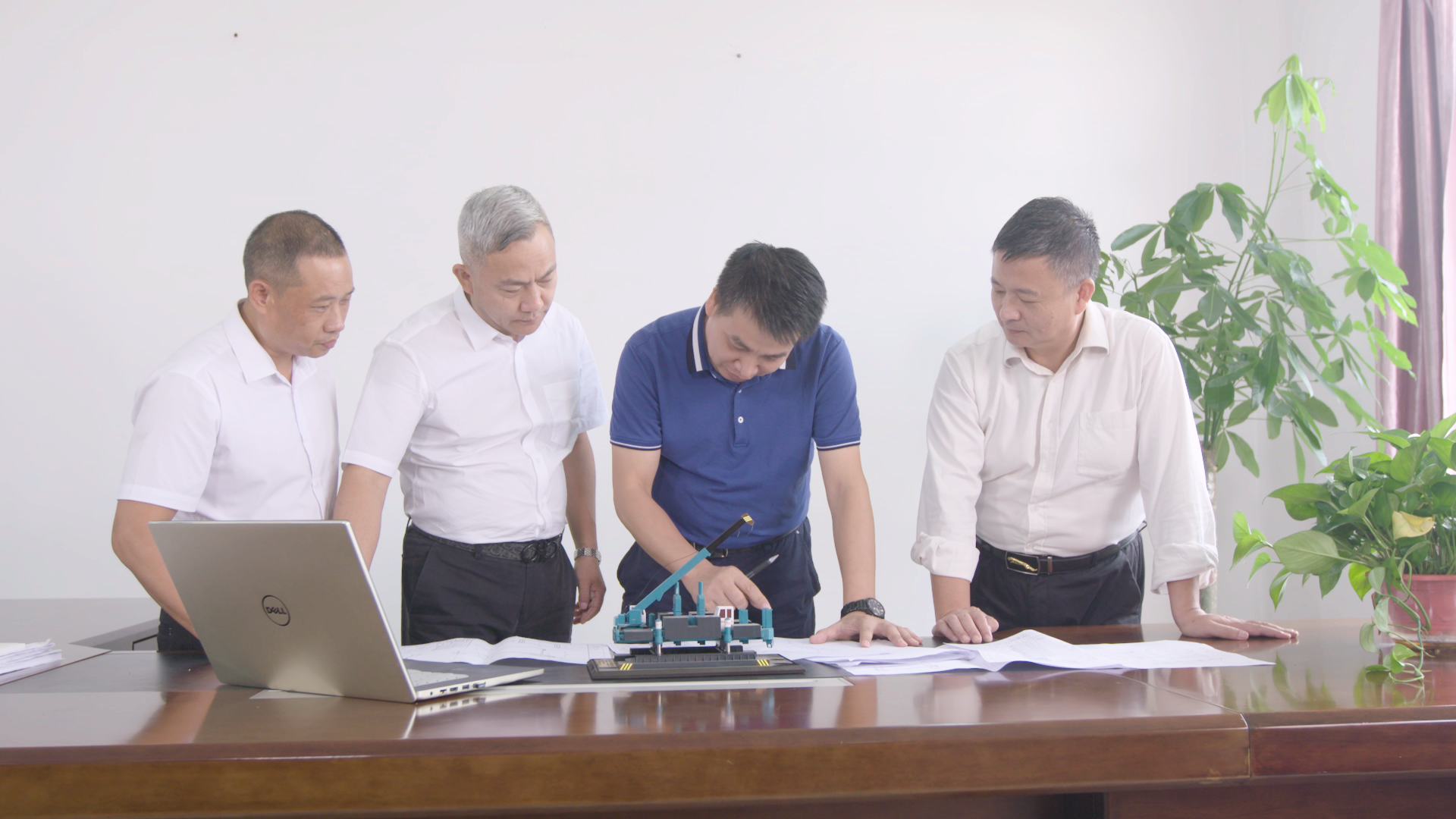
Pre-arrival: Calibrate chassis levelness on flat ground.
Post-positioning: Re-check guide frame verticality.
During piling: Re-measure chassis levelness and guide frame verticality every 10 meters (analogous to "regular health checks").
Real-Time Hydraulic System Monitoring: Continuously monitor pressure stability during construction to prevent pile inclination caused by unstable pressure.
IV. Series Preview & After-Sales Commitment
This concludes our first episode of the Tianwei Pile Driver Construction Science Series. In the upcoming installments, we will delve into more practical topics, such as pile driving force optimization under complex strata and emergency handling of pile foundation failures. Stay tuned for continuous insights into intelligent construction technology!
After-Sales Service Guarantee As a trusted partner in the industry, Tianwei is committed to providing 7×24-hour on-site guidance and after-sales support for all our equipment. Our technical team of certified engineers ensures rapid response to construction challenges, from equipment debugging to process optimization.
Why Choose Tianwei?


Trust Tianwei, Trust Made in China. Let’s build a safer, more efficient foundation together.

PRODUCTS

T-works will provide not only reliable piling machinery products but also excellent and efficient service.